The closure of the Strait of Hormuz (which handles 20% of global oil) has triggered what economists are calling the most sudden energy supply crisis in decades.
Skyrocketing Prices: Brent crude has surged past $100 per barrel, with some analysts warning of a “stagflation” scenario—low growth combined with high inflation.
Production Drops: Middle Eastern output has fallen by an estimated 10 million barrels per day. Saudi Arabia’s massive Safaniya offshore field remains shut down following recent regional strikes.
The Domestic Squeeze: * Gasoline: US gas prices have climbed above $4.00 per gallon in many states, the highest since late 2023.
Agriculture: Farmers are warning of a “fertilizer spike,” with urea prices jumping 25% this week alone. This will likely hit grocery bills by late spring.
Travel: Airlines like United have warned that runaway jet fuel costs will lead to immediate airfare hikes.
📉 Market Summary: March 15, 2026
Brent Crude: $102.40 (▲ 4.2%)
US National Gas Average: $4.12/gal
Dow Jones: Trending down as investors await the President’s next move on the Iranian blockade.
- As the conflict in the Middle East enters its third week, the “Hormuz Ripple Effect” has officially reached American gas stations. The national average has surged to $3.699 as of today, March 15, 2026, marking a significant jump from early February.

US Gas Prices
USA National Snapshot
National Average: $3.699 per gallon (Regular)
Weekly Change: ▲ +$0.37
- WTI Crude Oil: $94.65 per barrel (up from the mid-$70s last month)
Top 5 Most Expensive MarketsThe West Coast is feeling the tightest squeeze, with California surpassing the $5.50 mark in many regions.RankStateAvg. Price (Regular)1California$5.5092Hawaii$4.9453Washington$4.8884Nevada$4.5815Oregon$4.465📍 Top 5 Least Expensive MarketsThe Midwest and Plains states remain the “cheapest” fill-ups, though they are no longer below the $3.00 threshold seen earlier this year.RankStateAvg. Price (Regular)1Kansas$3.1342North Dakota$3.1803Oklahoma$3.2164Arkansas$3.2185Missouri$3.225
📈 Trending: Why the Surge?
The 15% jump in retail prices over the last seven days is tied to three major factors:
Blockade Fears: Markets are pricing in the “worst-case scenario” for the Strait of Hormuz, where Iran has threatened to maintain a long-term closure.
Spring Break Demand: Gas demand rose from 8.29 million to 9.24 million barrels this week as seasonal travel began, despite the rising costs.
Refinery Maintenance: Standard seasonal “switch-overs” to more expensive summer-blend fuel are adding an extra $0.10–$0.15 per gallon on top of the war-time premiums.
Quick Savings Tips
Use Apps: Tools like GasBuddy or the AAA TripTik are reporting wide price spreads (up to $0.40) between gas stations on the same block.
Strategic Fill-ups: Prices tend to be lowest on Mondays and Tuesdays. If you can wait until tomorrow, you might beat the mid-week “volatility hike.”
Strategic Reserve Release: The White House has announced the release of 172 million barrels from the Strategic Petroleum Reserve to stabilize prices—watch for a potential slight “dip” in prices by next weekend.
Gemini said
Today’s energy and travel landscape is shifting by the hour. Here is your local and global tracker for March 15, 2026.
⛽ Local Fuel Tracker: Kundian & Pakistan
The fuel market in Pakistan has entered a state of “emergency adjustment” following the escalation of the Middle East conflict.
Current Prices (Kundian/Punjab): * Petrol (Motor Spirit): Rs. 321.17 per litre (following a historic Rs. 55 hike on March 7).
High-Speed Diesel (HSD): Rs. 335.86 per litre.
Kerosene Oil: Rs. 358.00 per litre (Increased by Rs. 40 just today).
The Subsidy Shield: Petrol and Diesel prices remained unchanged in today’s weekly review only because the government implemented a Rs. 23 billion subsidy. Without this, petrol would have jumped an additional Rs. 49 today.
Weekly Reviews: The government has officially moved from fortnightly to weekly price reviews to keep pace with the volatile global market. Expect the next update on March 21.
✈️ Global Airfare Tracker: The “Hormuz Surcharge”
The aviation industry is facing its biggest shock since 2020. The closure of the Strait of Hormuz and the rerouting of flights away from Iranian/Middle Eastern airspace have sent ticket prices into a tailspin.
The Price Surge: * Asia to Europe: Economy fares on routes like Bangkok to London have skyrocketed by 900% for last-minute bookings. A one-way ticket that cost $1,000 last month is now being quoted as high as $8,000+ on some carriers.
Surcharges: Cathay Pacific and Singapore Airlines are doubling fuel surcharges effective March 18. Thai Airways and Qantas have already implemented 15% fare hikes.
Capacity Cuts: Over 46,000 flights have been cancelled across the region since February 28. Air New Zealand alone cancelled 1,100 flights this week to manage costs and safety.
The “Detour” Tax: Flights between the East and West now take 2–3 hours longer as they bypass the Middle East via the Caucasus (North) or Egypt (South). This adds roughly $60,000 to $75,000 in fuel and crew costs per flight.
Summary Outlook
Sector Status Trend Local Petrol Critical Stable for 7 days due to subsidy; hike likely next week. Kerosene Volatile Now the most expensive fuel in Pakistan at Rs. 358. International Flights Severe 900% spikes on last-minute Asia-Europe routes. Summer Travel Warning Experts advise booking August travel now before further hikes.
As the conflict continues to disrupt traditional air corridors, airlines have shifted to two primary “detour” strategies to keep international travel moving. If you are planning a trip today, March 15, 2026, here are the alternative routes being used to bypass the closed airspaces of Iran, Iraq, and the UAE.
1. The “Northern Corridor” (The Silk Road Path)
This is the primary alternative for flights between Europe and East/South Asia.
The Route: Planes are flying north of the conflict zone, crossing over Turkey, Azerbaijan, and Central Asia (specifically Uzbekistan and Tajikistan).

United States
The “Papa 500” Corridor: A specific high-altitude airway (P500) over the Wakhan Corridor in northeastern Afghanistan has become a vital link connecting Pakistan’s airspace with Tajikistan, allowing flights to avoid Iran entirely.
Impact: This route is safer but faces heavy congestion. Airlines like Lufthansa, British Airways, and Air France are frequently using this path, often adding 60 to 90 minutes to flight times.
Gemini said
As the conflict continues to disrupt traditional air corridors, airlines have shifted to two primary “detour” strategies to keep international travel moving. If you are planning a trip today, March 15, 2026, here are the alternative routes being used to bypass the closed airspaces of Iran, Iraq, and the UAE.
1. The “Northern Corridor” (The Silk Road Path)
This is the primary alternative for flights between Europe and East/South Asia.
The Route: Planes are flying north of the conflict zone, crossing over Turkey, Azerbaijan, and Central Asia (specifically Uzbekistan and Tajikistan).
The “Papa 500” Corridor: A specific high-altitude airway (P500) over the Wakhan Corridor in northeastern Afghanistan has become a vital link connecting Pakistan’s airspace with Tajikistan, allowing flights to avoid Iran entirely.

United States
Impact: This route is safer but faces heavy congestion. Airlines like Lufthansa, British Airways, and Air France are frequently using this path, often adding 60 to 90 minutes to flight times.
2. The “Southern Corridor” (The African/Red Sea Path)
Used primarily for flights connecting Southern Europe/Africa to Southeast Asia and Australia.
The Route: Flights route across the Mediterranean to Egypt, then proceed across central/southern Saudi Arabia (utilizing “free-route” airspace) before heading out over the Indian Ocean toward India.
Impact: This detour is significantly longer. For example, Qantas has adjusted its direct Perth-to-London flight to include a technical refueling stop in Singapore because the extra fuel required for the southern detour makes the non-stop flight too heavy to take off with a full passenger load.
3. The “Pacific Pivot” (Westbound from USA)
For travelers heading from the U.S. to South Asia (like India or Pakistan), the traditional “Polar” or Middle Eastern transit routes are being abandoned.
The Route: More travelers are opting for westbound flights with layovers in Singapore (Changi), Hong Kong, or Tokyo.
Recommended Hubs: Singapore Changi (SIN) and Seoul Incheon (ICN) have seen a massive influx of “rerouted” passengers, as these hubs offer the most stable connections to South Asia without nearing the conflict zone.
Critical Traveler Alerts for March 15, 2026
GPS Jamming Warning: Pilots are reporting significant GPS interference near the borders of the conflict zone. While commercial aircraft have backup navigation (IRS), this can lead to minor delays as flight patterns are spaced further apart for safety.
The “Detour Tax”: Expect a “War Surcharge” on tickets. Rerouting adds roughly $60,000–$75,000 in fuel costs per flight. Airlines like Cathay Pacific are doubling their fuel surcharges starting this week.
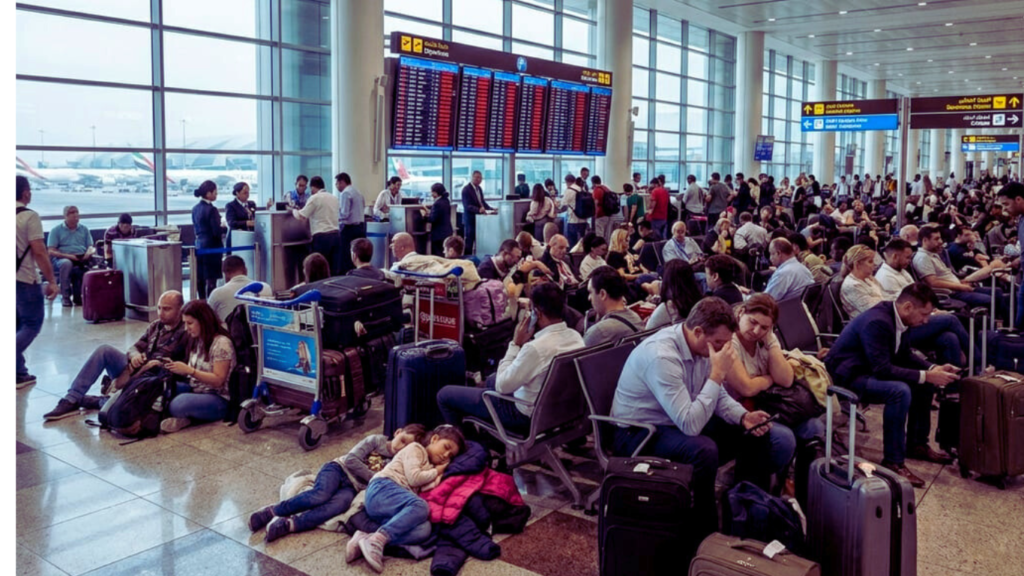
Check-in Early: Due to the “messy” rebooking process for thousands of stranded passengers in hubs like Istanbul and Singapore, airport authorities recommend arriving 4 hours early for international departures.
Given the ongoing regional instability as of March 15, 2026, almost every major carrier operating in or through the Middle East has issued emergency travel waivers. These are designed to allow you to rebook or cancel without the usual heavy penalties.
Below is a breakdown of the current active waivers by airline.
| Airline | Policy Highlights | Eligibility Window |
| Emirates | Up to 9 free changes or a full refund; rebook for travel within 20 days of original date. | Tickets issued by March 1 for travel thru March 31. |
| Qatar Airways | 2 free date changes within 14 days of original travel or full refund for unused value. | Bookings between Feb 28 and March 22. |
| Etihad | One free change for travel through March 18; full refund if flight is cancelled by the airline. | Tickets issued by Feb 28 for travel thru March 7. |
| Lufthansa Group | Free rebooking or refund for affected flights; travel to Dubai/Abu Dhabi suspended thru March 15. | Tickets issued by March 1 for travel thru March 26. |
| Air India | Complimentary rescheduling or full refund on cancellation for Middle East, UK, and Europe routes. | Bookings made by Feb 28 for travel thru March 10. |
| American / United | Change fees waived; fare difference waived only if rebooked within a specific window (usually 14–21 days). | Tickets issued by Feb 28 for travel thru March 31. |
Gemini said
Given the ongoing regional instability as of March 15, 2026, almost every major carrier operating in or through the Middle East has issued emergency travel waivers. These are designed to allow you to rebook or cancel without the usual heavy penalties.
Below is a breakdown of the current active waivers by airline.
✈️ Major Airline Waiver Summary
🔍 Key Restrictions to Watch For
While these waivers are generous, they come with “fine print” that could cost you if you aren’t careful:
The “Same Cabin” Rule: Most airlines will waive the change fee, but they will only waive the fare difference if you rebook in the same cabin (e.g., Economy to Economy). if you move from a “Deal” seat to a “Full Fare” seat, you may still owe the difference.
Third-Party Bookings: If you booked through Expedia, Kayak, or a local travel agent in Punjab, the airline may refuse to help you directly. You must contact the agency to apply the waiver.
Expiration Dates: Many of the “Free Rebooking” windows (where the fare difference is zero) are set to expire between March 29 and March 31. After that, you may have to pay the current (and much higher) market rate.
🛑 Urgent Local Alert: Pakistan Cancellations
As of today, at least 25 additional flights from Lahore, Sialkot, and Multan to Gulf destinations (Dubai, Doha, Bahrain) have been cancelled.
Do not go to the airport unless your airline app shows a “Confirmed” and “On Time” status.
Indigo has officially suspended all service to Doha, Kuwait, and Dammam until March 28, 2026.
o help you manage your travel during this volatile period, I have compiled the essential contact details for airlines in Pakistan and identified the most reliable “Northern Corridor” routes currently in operation.
📞 Airline Customer Service (Pakistan)
Due to high call volumes, most airlines recommend using WhatsApp or Live Chat on their websites first. If you must call, use a landline for 0800 numbers.
| Airline | Phone Number (Pakistan) | Status / Notes |
| PIA (National) | 111-786-786 | Operating normally; check their app for flight PK5744 status. |
| Emirates | (021) 111-225-535 | 24/7 Support. Islamabad Office: Ufone Tower, Blue Area. |
| Qatar Airways | +974 4010 1812 | Global Baggage/Urgent line; use Website Live Chat for rebooking. |
| Etihad | (051) 810-9092 | No walk-in offices; call center active 9 AM – 5 PM. |
| Turkish Airlines | (051) 849-4949 | Highly Recommended for Northern Corridor transit. |
| FlyDubai | +971 600 54 44 45 | Sialkot/Multan operations are subject to daily changes. |
| Air Arabia | (021) 3565-1581 | Contact for Karachi-based queries and Sharjah transit.
|
🗺️ Reliable Alternative Routes (The Northern Path)
If you are trying to reach Europe or North America while avoiding the conflict zone, these are the most stable “safe-haven” routes as of March 15, 2026:
The Istanbul Gateway (Turkey):
Route: Lahore (LHE) or Islamabad (ISB) ➔ Istanbul (IST) ➔ Europe/USA.
Why: Turkish Airlines and PIA codeshare flights are currently the most reliable way to bypass Iran, flying over Azerbaijan and the Black Sea.
The Tashkent Connection (Uzbekistan):
Route: Sialkot (SKT) or Lahore ➔ Tashkent (TAS) ➔ Europe.
Availability: FlyDubai is operating 1-stop flights via Tashkent. This is a vital “backdoor” route that avoids the Persian Gulf entirely.
The Baku Bridge (Azerbaijan):
Route: Islamabad ➔ Baku (GYD) ➔ Europe.
Why: Azerbaijan Airlines (AZAL) has increased capacity for Pakistani travelers looking for a transit point that stays north of the war zone.
Final Travel Tips for Today
Waiver Check: When calling, explicitly ask: “Can I rebook under the Regional Conflict Emergency Waiver?” This ensures you aren’t charged a “voluntary change” fee.
Transit Visas: If you choose a new route via Uzbekistan or Azerbaijan, double-check if you need a transit visa, as many e-visa systems are currently overwhelmed.
Airport Timing: Islamabad (IIAP) and Lahore (AIIAP) are experiencing longer security queues due to increased passenger loads from diverted flights. Arrive 4 hours early.