
OpenAI to revise Pentagon AI deal after backlash

OpenAI says it will amend its recent agreement with the United States Department of Defense after criticism over how its AI systems could be used in classified military operations.
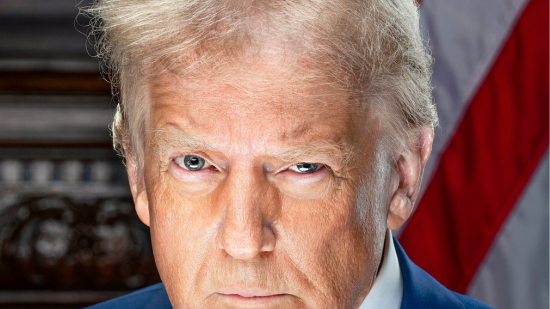
Donald Trump 2025 speaking Project 2025 policy blueprint influences immigration and Venezuela strategy

Donald Trump 2025 speaking Project 2025 policy blueprint influences immigration and Venezuela strategy

Chief executive Sam Altman acknowledged the company rushed the original announcement, calling it “opportunistic and sloppy,” and pledged clearer safeguards. The updated language will explicitly prohibit the use of OpenAI systems for domestic surveillance of US citizens and nationals. Intelligence agencies, including the National Security Agency, would require additional contractual modifications before accessing the technology.

Fallout from Anthropic dispute

The controversy followed tensions between the Pentagon and Anthropic, whose AI model Claude was reportedly restricted by the Trump administration after the company refused to remove a corporate “red-line” against developing fully autonomous weapons.

Despite that stance, Claude’s reported use in the US-Israel conflict with Iran raised further scrutiny over how frontier AI models are integrated into operational military workflows.

OpenAI had initially claimed its agreement included “more guardrails than any previous agreement for classified AI deployments.” However, backlash from users was swift. Reports suggest day-over-day uninstalls of the ChatGPT mobile app surged dramatically, while Claude climbed to the top of Apple’s App Store rankings.

How AI is already embedded in warfare

Artificial intelligence is now deeply integrated into military logistics, intelligence processing, and battlefield analysis. Companies like Palantir Technologies supply data-fusion platforms to US, Ukrainian and NATO forces.

Palantir’s AI-enabled defence platform Maven aggregates satellite imagery, battlefield telemetry, and intelligence reports. Commercial large language models — including Claude — can then assist analysts in synthesising that data to accelerate operational decisions.

NATO officials stress that these systems operate with “human in the loop” oversight. Lieutenant Colonel Amanda Gustave, chief data officer for NATO’s Task Force Maven, previously emphasised that AI systems do not independently make lethal decisions.

However, experts warn about reliability risks. Large language models are prone to “hallucinations” — generating confident but incorrect outputs — a vulnerability that becomes critical in high-stakes military contexts.

Professor Mariarosaria Taddeo of Oxford University argued that with Anthropic sidelined, one of the more safety-focused AI actors may be absent from Pentagon deliberations — potentially shifting the balance between capability and constraint.

Bigger questions for AI governance

The episode underscores widening tensions between:

  • National security imperatives

  • Corporate AI governance policies

  • Public trust in consumer AI tools

  • The ethical boundaries of autonomous weapons

As AI systems move from civilian chatbots into classified defence environments, the contractual architecture — including usage restrictions, audit rights, and human-oversight guarantees — is becoming as strategically important as the underlying models themselves.
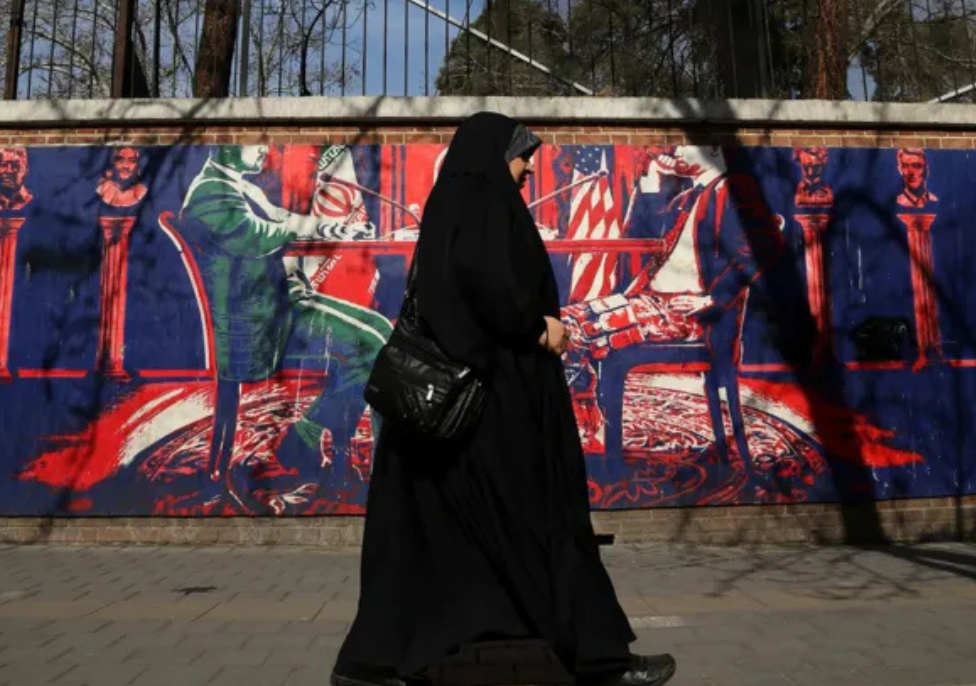
What Could happen if the USA attacks Iran? Here are seven scenarios

The US appears poised to strike Iran within days

The potential targets are mega predictable the outcome is not.

if not last minute deal can be reached with Tehran and President Donald Trump decides to order US forces to attack then what are possible results.

USA Iran War

Middle East

Regime collapses replace by Chaos

This real danger and one of mega worries of neighbors like Saudi Arabia and Qatar.

The possible of civil war like experience by Syria Yemen and Libya there is danger that in chaos and confusion ethnic tensions could spill over into armed conflict as Kurds,  Baluci and other minorities look safeguard their own people and nationwide power vacuum.

The greatest danger is President Trump having amassed this powerful close to Iran borders decide he must act or lose face and war starts with no clear end state and with unpredictable and potential damaging repercussions.

Much of the Middle East would certainly be glad to see the back of the Islamic Republic, none more so than Israel which has already dealt heavy blows to Iran’s proxies across the region and which fears an existential threat from Iran’s suspected nuclear programme.

But nobody wants to see the largest Middle East nation by population – around 93 million – descend into chaos, sparking a humanitarian and refugee crisis.

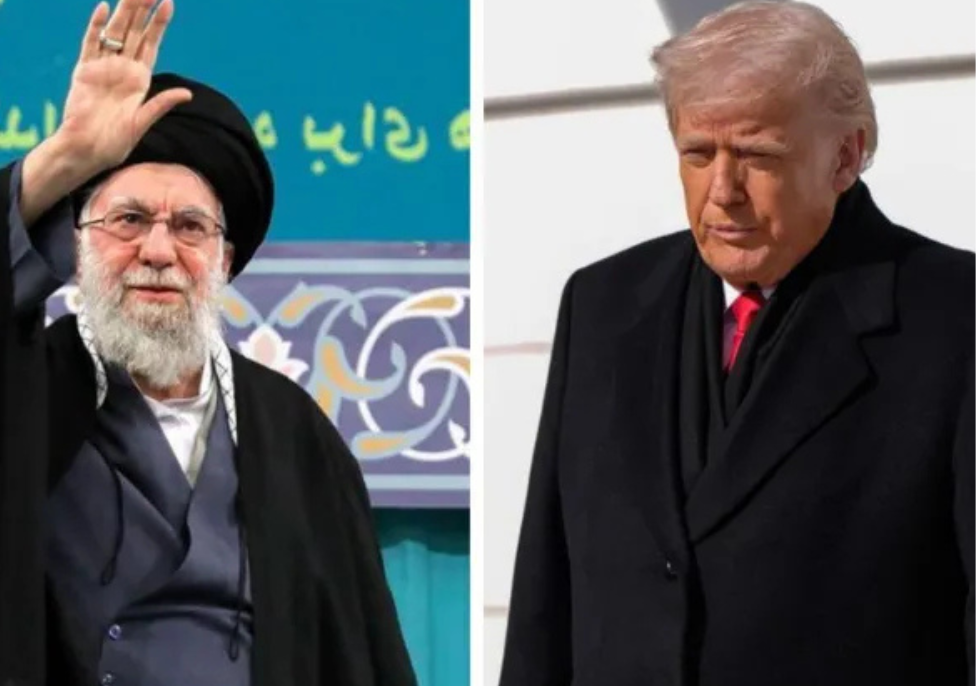
USA President Donald Trump and Iran Presiden Ayatollah Khameni

USA President Donald Trump and Iran Presiden Ayatollah Khameni

Iran retaliates sinking a US warship

A US Navy Captain onboard a warship in Gold once told me that one of threats from Iran he worries about is swarm attack.

This is where Iran launches so many high explosive drones and fast torpedo boats at single or multiple targets that even US Navy formidable close in defense are unable to eliminate all of them in time,

Iran naval crews have focused much of their training on unconventional or asymmetric warfare looking ways to overcome or bypass the technical advantage enjoyed

by primary adversary the US Navy fifth fleet.

The IRGC ?navy has long replace by conventional Iranian Navy in Gulf some of commander were even trained at Dartmouth during time of Shah,


The sinking of US warship accompanied by possible capture of survivors among crew would be massive humiliation for US.


This scenario thought the billion dollar destroyer the USS Cole was crippled by AL Qaeda suicide attack in Aden harbour in 2000 killing 17 US sailors.


Iran response by laying mines in the Gulf


This has long loomed as danger to world shipping and oil supplies ever since the Iran Iraq war of 1980-88 when Iran did need mine the shipping lanes and Royal Navy minesweepers helped clear them.


The narrow strait of Hormuz between Oman and Iran is critical checkpoint.

Almost 20% of global liquified Natural Gas LNG exports and between 20-25% of oil and oil byproducts pass through this strait each year.


Iran has conducted exercises in deploying sea mines.

USA Iran War

Middle East


Iran retaliates by attacking US forces and neighbours


Iran has vowed to retaliate against any US attack adding that it is finger is on trigger.

It is clear no match for might of USA navy and Air Force but it could still lash out with arsenal of ballistic missiles and drones many concealed in caves underground to remote mountainsides.

The devastating missile and drone attack on Saudi Aramco petrochemical facilities in 2019 attributed to Iranian backed army in Iraq showed the Saudia just how they were to Iranian missiles.


Iran Gulf Arab neighbours all US allies are understandably extreme jitter right now that US army action is going to end up rebounding on them.


Regime collapses, replaced by military rule

Many view this is most like possible result.

The regime is clear infamous with many and each successive wave of protest over year weakens if further there remains huge security deep state with interest in status quo.


The principal reason why protest have so far failed to overthrow the regime is there have been no defection to their side.

Those in control are prepared to use unlimited force to remain in power.