
Meta Description: Premier League clubs smashed the transfer spending record again in summer 2026, splashing out £3.46 billion. Here’s the full breakdown of every big-money deal, deadline day drama, and what it means for the 2026-27 season.
Introduction: Why the Premier League 2026 Transfer Window Is the Biggest Story in World Football Right Now
If you’ve searched anything like “premier league transfer news today,” “biggest football transfers 2026,” or “how much did premier league clubs spend this summer,” you’ve landed in the right place. The 2026 summer transfer window has officially closed, and it didn’t just break the Premier League transfer spending record — it obliterated it for the second year running.
English top-flight clubs spent an eye-watering £3.46 billion ($4.67 billion) between mid-June and the 11pm deadline on September 1, 2026. That number alone makes this the most expensive transfer window in the history of English football, surpassing last summer’s already-record £3.19 billion outlay. To put that in perspective, five years ago the entire league spent just £1.13 billion combined. The Premier League’s financial arms race has entered a completely new stratosphere, and football fans worldwide are trying to make sense of what it means for the balance of power in the 2026-27 season.
This deep dive covers everything trending in the football world right now: the record-breaking numbers, the deadline day chaos, the club-by-club breakdown, the deals that collapsed at the last minute, and what all this spending actually means heading into a season already being called one of the most unpredictable in Premier League history.
Premier League Transfer Window 2026: The Headline Numbers
Let’s start with the raw data, because the scale of spending this summer is genuinely historic.
- Total spend: £3.46 billion ($4.67 billion) across all 20 Premier League clubs
- Deadline day spend alone: £475 million ($640.1 million), up from £391 million on the same day last year
- Previous record: £3.19 billion, set in summer 2025
- Five years ago: Just £1.13 billion — meaning spending has roughly tripled in half a decade
- Deals between Premier League clubs: Around 38% of all transfers were completed between clubs within the league itself, up from 30% last year
That last stat is worth pausing on. Nearly two out of every five deals this summer involved one Premier League club selling to another. This “internal market” effect is becoming one of the defining features of the modern transfer window — money isn’t leaving English football, it’s simply recirculating between clubs, inflating fees at every level of the pyramid. If you’re researching “why are premier league transfer fees so high” or “premier league internal transfer market explained,” this recycling of TV and broadcast revenue between clubs is a huge part of the answer.
The Biggest Transfer of the Summer: Enzo Fernandez to Manchester City
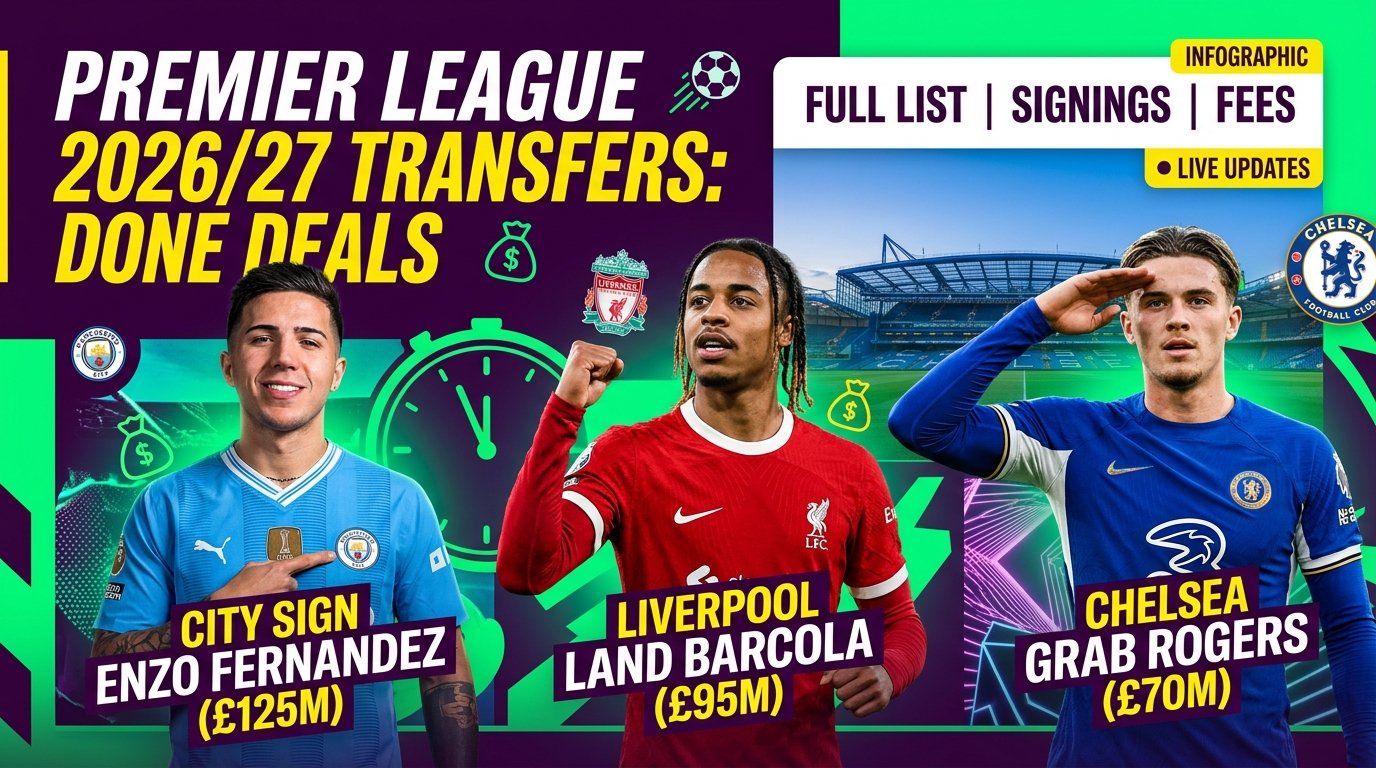
No storyline dominated football headlines this deadline day quite like Enzo Fernandez’s move from Chelsea to Manchester City for a reported £125 million ($168.8 million) — a fee that equals the British transfer record set last year when Alexander Isak moved from Newcastle United to Liverpool.
For anyone searching “enzo fernandez transfer fee to man city” or “how much did man city pay for enzo fernandez,” here’s the full picture: the Argentina World Cup winner had been the subject of transfer speculation throughout the entire summer, and the deal only came together in the closing hours of deadline day. New Manchester City manager Enzo Maresca — himself only recently appointed — used the signing to cap off a mammoth £458 million spending spree as he rebuilt his first squad at the Etihad.
There’s a fascinating subplot here too: Fernandez is now the first player in football history to be transferred twice for fees exceeding £100 million (£134.7 million), first from Benfica to Chelsea in January 2023 for £106.8 million, and now from Chelsea to Manchester City for £125 million. Three-and-a-half years ago, that original fee was considered a symbol of transfer market excess. Today, Chelsea have actually turned a profit on the deal — a sign of just how much transfer valuations have inflated across the board.
City didn’t stop there. They also brought in Senegal winger Iliman Ndiaye from Everton for a reported £65 million ($87.7 million), rounding out one of the most aggressive rebuilding jobs any club has undertaken in a single window.
Full Club-by-Club Breakdown: Who Spent What in the 2026 Summer Transfer Window
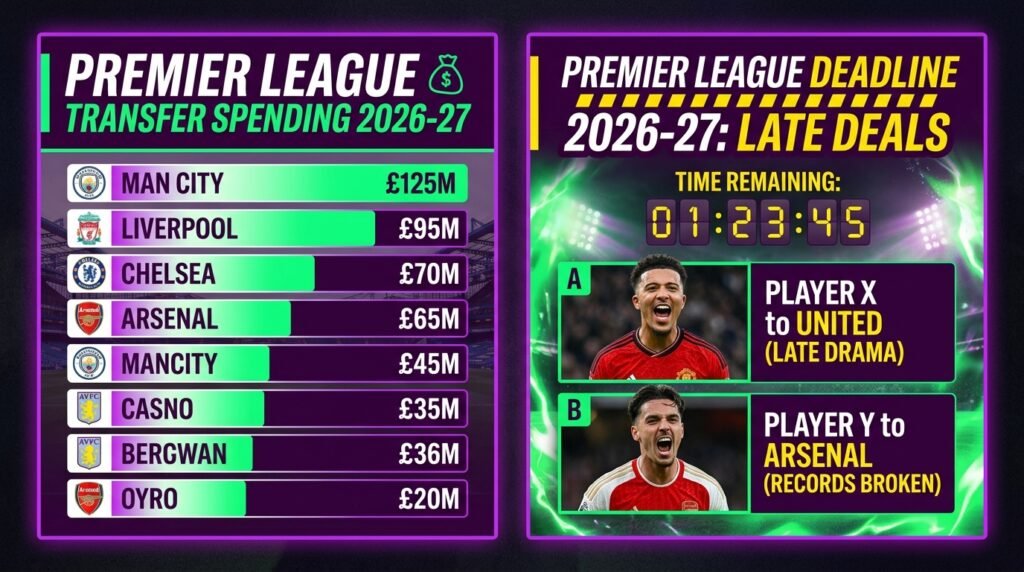
If you’re searching “premier league club spending 2026 ranked” or “which premier league club spent the most this summer,” here’s how the biggest spenders shaped up:
Manchester City — The Biggest Spenders
City topped the spending charts with roughly £458 million (£440m gross spend reported elsewhere) outlay, offset by around £315 million in player sales. New manager Enzo Maresca essentially rebuilt the spine of the squad, headlined by Enzo Fernandez and Iliman Ndiaye, alongside Brazilian winger Allan Elias, signed from Palmeiras.
Chelsea — Heavy Spending Under Xabi Alonso
Chelsea shelled out roughly £342-349 million as new head coach Xabi Alonso assembled his first full squad at Stamford Bridge. Interestingly, Chelsea’s sales — including Fernandez to City — meant their net spend was far more balanced than the headline gross figure suggests. This is one of the clearest examples this window of a club using outgoing sales to fund the next wave of incomings.
Tottenham Hotspur — Rebuilding After Two Rocky Seasons
Spurs splashed out £303 million, a clear statement of intent after two consecutive seasons flirting with relegation trouble. Their spending this summer reflects one of the more dramatic transfer strategy shifts in the league, aimed at rapidly closing the gap to the traditional “big six.”
Arsenal — Reigning Champions Reinforce
As reigning champions, Arsenal added Brazilian midfielder Bruno Guimarães as their marquee signing, part of a £262 million ($262m) outlay that made them the seventh-highest spenders in the league. For a title-winning side, this level of continued investment shows Arsenal have no intention of standing still.
Liverpool — Barcola Arrives from PSG
Liverpool rose to sixth in the spending charts thanks to the costly acquisition of French winger Bradley Barcola from Paris Saint-Germain. There were also strong reported links to Crystal Palace and Bayern Munich target Michael Olise, showing Liverpool’s front-four ambitions remain sky-high under their current project.
Manchester United — Midfield Rebuild
United completed a full midfield overhaul, signing Andrey Santos, Youri Tielemans, and Carlos Baleba — all pulled from within the Premier League itself, reinforcing that “internal market” trend mentioned earlier. Their business made them the ninth-highest spenders in the league.
Sunderland — Punching Above Their Weight (Again)
Newly promoted Sunderland’s £255.3 million outlay surpassed the £221 million they spent the previous year — remarkable given they’re a newly promoted side. That spending helped fuel an unexpected European qualification push last season, and their marquee deadline-day arrival, Belgian winger Malick Fofana from Olympique Lyonnais for around £30 million, suggests they’re serious about building on that success rather than simply consolidating.
The Promoted Clubs — Ipswich, Coventry City and Hull City
The three promoted clubs collectively spent more than £400 million to prepare for life in the Premier League — a staggering figure for newly promoted sides and further evidence of how even mid-table survival now requires nine-figure investment.
The Lowest Spenders
Sunderland (relatively, compared to their rivals), Crystal Palace, and Bournemouth were the only three clubs to spend under $100 million this summer, proving that smart recruitment and squad continuity remain viable strategies even in an era of runaway spending.
Deadline Day Drama: The Deals That Collapsed
Every transfer window has its share of last-minute heartbreak, and the 2026 deadline day was no exception. If you’re searching “premier league transfers that fell through 2026” or “why did the Balogun to Everton deal collapse,” here’s what happened:
- Folarin Balogun to Everton — This move reportedly collapsed after the American striker himself decided against proceeding with the transfer, leaving Everton’s forward line search unresolved deep into the new season.
- Lamine Camara to Chelsea — The Senegal international’s reported £47.1 million move from Monaco to Chelsea fell apart at the eleventh hour, meaning he remains in Ligue 1 for now despite weeks of speculation linking him to Stamford Bridge.
These late collapses are a reminder that even in a market flush with cash, deals can still unravel over medical results, personal terms, or a player’s change of heart right up until the deadline.
Why Premier League Transfer Spending Keeps Breaking Records
This is probably the question most people are actually googling: “why do premier league clubs spend so much on transfers” or “is premier league transfer spending sustainable.” A few forces are converging to drive fees ever higher:
- Broadcast revenue growth — The Premier League’s domestic and international TV deals continue to grow, giving clubs more disposable income than any other league in world football.
- Financial Fair Play adaptations — Clubs have become increasingly sophisticated at structuring deals (long contracts, add-ons, sell-on clauses) to stay within profitability and sustainability rules while still spending heavily.
- The “internal market” effect — As noted, with 38% of deals happening between Premier League clubs, money spent by one club often becomes revenue for another, creating a self-reinforcing spending cycle that doesn’t necessarily reflect new external investment.
- Newly promoted club investment — Promoted sides no longer treat survival as the only goal; many now spend nine figures collectively just to be competitive from day one, a strategy that has paid off for clubs like Sunderland in recent seasons.
- Global superstar wage and fee inflation — As stars like Enzo Fernandez become “twice-over £100 million players,” valuations across the entire market shift upward, even for squad players and rotation pieces.
What This Means for the 2026-27 Premier League Title Race
With this much money spent, the natural next question is: does spending translate to Premier League titles? Historically, correlation between summer spending and end-of-season success is real but not absolute.
- Manchester City’s aggressive rebuild under Enzo Maresca signals a club determined to reclaim the title after recent turbulence, with Fernandez and Ndiaye both filling clear tactical needs.
- Arsenal, as reigning champions, have reinforced rather than overhauled their squad — a sign of a club backing continuity while still adding genuine quality in Bruno Guimarães.
- Chelsea’s spending under Xabi Alonso suggests a genuine title push is being planned, rather than simply financially engineered squad churn.
- Liverpool and Tottenham both look to have strengthened key attacking areas, which could make the race for Champions League qualification, let alone the title itself, tighter than it’s been in years.
- Sunderland’s continued heavy investment as a newly promoted club is one of the most fascinating subplots of the season — can they replicate or improve on last year’s surprise European qualification?
For fans searching “premier league title favorites 2026-27” or “who will win the premier league this season,” the honest answer right now is that the transfer market has narrowed the gap between the traditional top six and the chasing pack more than in any recent season, making this one of the most open title races in years.
Long-Tail Questions Football Fans Are Searching Right Now
To make sure this guide answers everything you might be looking for, here are quick answers to some of the most common football search queries trending alongside this story:
How much did Premier League clubs spend in summer 2026? Premier League clubs spent a combined £3.46 billion ($4.67 billion), a new all-time record for a single transfer window.
What is the most expensive Premier League transfer of 2026? Enzo Fernandez’s £125 million move from Chelsea to Manchester City is the most expensive transfer of the summer 2026 window, equaling the British transfer record.
Which Premier League club spent the most money in the 2026 transfer window? Manchester City were the biggest spenders, with an outlay of around £440-458 million as new manager Enzo Maresca rebuilt his squad.
How many Premier League clubs broke their transfer records in 2026? At least 11 Premier League clubs set new all-time club transfer records during the summer 2026 window, including Manchester City, Tottenham Hotspur, and Chelsea.
What percentage of Premier League transfers happened between Premier League clubs? Around 38% of all Premier League deals this summer were completed between clubs within the league itself, up from 30% the previous year.
Which transfers collapsed on Premier League deadline day 2026? Folarin Balogun’s move to Everton and Lamine Camara’s reported transfer from Monaco to Chelsea both fell through before the deadline.
When did the Premier League summer transfer window close in 2026? The window closed at 11pm BST (22:00 GMT) on Tuesday, September 1, 2026.
How much has Premier League transfer spending grown in five years? Spending has roughly tripled — from £1.13 billion five years ago to £3.46 billion in summer 2026.
The Bigger Picture: Premier League’s Global Football Dominance
Beyond the individual deals, this transfer window underscores something bigger: the Premier League’s financial dominance over the rest of world football continues to widen. In previous windows, the Premier League has accounted for close to half of all spending across Europe’s top five leagues — a gap that appears to have only grown in 2026. La Liga, Serie A, Bundesliga, and Ligue 1 clubs simply cannot compete with the Premier League’s broadcast-driven purchasing power, which is why so many of this summer’s biggest sales — Bradley Barcola from PSG, Malick Fofana from Lyon, Allan Elias from Palmeiras — involved players leaving other leagues for England rather than the reverse.
This dynamic has real consequences for global football fans following storylines around player development pathways, academy investment, and the increasing homogenization of top talent flowing toward a single league. Whether you’re a fan of the Premier League specifically or of world football broadly, the financial gravity of English football is reshaping how, where, and when the best young talent in the sport ends up.
Final Thoughts: A Season Shaped Before a Ball Is Kicked
The summer 2026 transfer window will be remembered as the moment Premier League spending crossed into genuinely unprecedented territory — £3.46 billion, a British transfer record equaled, 11 clubs breaking their own spending records, and a title race that looks wide open before a single competitive match has even been played.
Whether Manchester City’s mammoth rebuild under Enzo Maresca pays off, whether Chelsea’s investment under Xabi Alonso finally delivers silverware, or whether an unfancied side like Sunderland continues to punch above its weight, one thing is certain: the 2026-27 Premier League season has already delivered one of the most dramatic storylines in recent football history, and it hasn’t even kicked off yet.
Keep this page bookmarked — as the season unfolds, we’ll be tracking how all this record-breaking transfer business translates onto the pitch, from early-season form to the inevitable January transfer window rumors that will start almost as soon as August ends.
Looking for more football transfer news, Premier League analysis, and in-depth coverage of the biggest storylines in world football? Check back for regular updates throughout the 2026-27 season.