
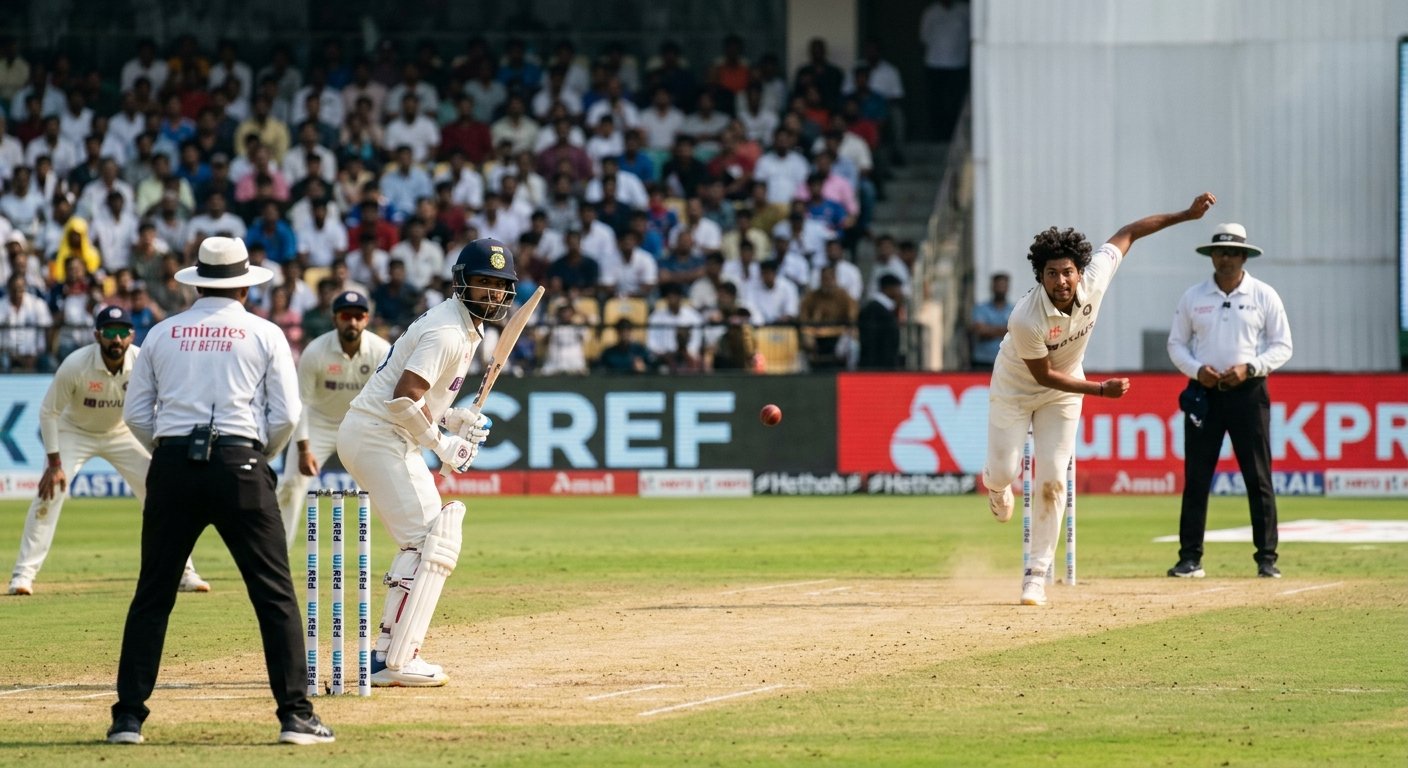
Vaibhav Sooryavanshi produced one of the most eye-catching moments of the 2026 Duleep Trophy final when the 15-year-old batter attacked Mohammed Siraj for 14 runs in a single over.
Playing for East Zone against South Zone at the MA Chidambaram Stadium in Chennai, Vaibhav smashed 44 off 37 balls before being dismissed in the 15th over.
The highlight of his innings came against Siraj. The young batter hit the India fast bowler for four, six and four, turning one over into a 14-run burst and immediately putting the spotlight on the teenage opener.
Vaibhav did not reach a half-century, but his aggressive start helped East Zone establish early momentum and added another notable chapter to his rapidly developing red-ball career.
Vaibhav Sooryavanshi vs Mohammed Siraj: What happened?
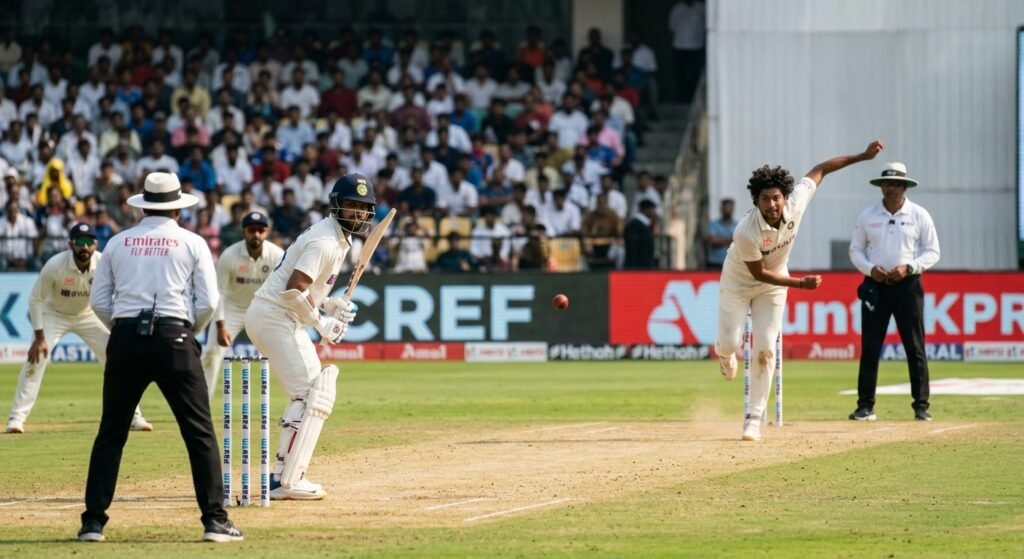
Vaibhav opened the innings for East Zone alongside Abhimanyu Easwaran and immediately looked to put pressure on South Zone’s bowlers.
Siraj was one of the most experienced bowlers in the South Zone attack, but Vaibhav showed little hesitation when facing him.
During the seventh over, the teenager produced the sequence that became the defining moment of his innings:
4 – 6 – 4
The three boundaries brought 14 runs from the over and demonstrated Vaibhav’s willingness to attack even an experienced international bowler.
The moment was particularly notable because of the difference in experience between the two players.
Siraj has represented India at international level, while Vaibhav is still at the beginning of his senior domestic career.
Yet for that over, the teenager took the initiative.
How many runs did Vaibhav Sooryavanshi score?
Vaibhav scored 44 runs from 37 deliveries in the Duleep Trophy final.
His strike rate was approximately 118.9, underlining how aggressively he approached his innings.
Rather than spending a long period settling into the final, Vaibhav looked to score from the beginning and helped East Zone make a fast start.
His dismissal meant he missed out on another significant score, but his contribution was still one of the early talking points of the match.
The innings also came shortly after his impressive 92 against Central Zone in the semi-final.
That combination of performances has increased interest in how his attacking style develops in first-class cricket.
Vaibhav’s 4-6-4 against Siraj becomes the talking point
The most memorable sequence of Vaibhav’s innings was his attack on Siraj.
The teenager connected with three deliveries for:
- Four
- Six
- Four
The 14-run over quickly became one of the most discussed moments from the opening phase of the final.
The significance was not simply that Siraj conceded 14 runs.
It was the manner in which Vaibhav approached the contest.
Instead of allowing the experienced fast bowler to control the tempo, Vaibhav attempted to put Siraj under immediate pressure.
The sequence also showed why aggressive strokeplay has become such an important part of Vaibhav’s reputation.
How did Mohammed Siraj respond?
Siraj’s opening spell came under pressure during East Zone’s aggressive start.
According to the match reports cited in the original article, he conceded 41 runs in his first five-over spell.
That figure should be viewed in context rather than treated as a judgment on Siraj’s overall performance.
Fast bowlers can have expensive spells in first-class cricket, particularly when batters attack from the outset and fielding restrictions or attacking field settings influence the contest.
Vaibhav’s aggressive batting nevertheless forced South Zone to respond.
Reports also indicated that South Zone captain Tilak Varma placed five fielders on the boundary as East Zone’s openers continued their attacking approach.
That illustrates how quickly the opening partnership affected the field.
Why Vaibhav Sooryavanshi’s innings matters
Vaibhav’s performance is interesting because the Duleep Trophy presents a very different challenge from T20 cricket.
The teenager has already attracted attention for his explosive batting in shorter formats.
First-class cricket, however, demands another set of skills.
A batter must be able to:
- survive long spells,
- manage changing conditions,
- defend patiently,
- select scoring opportunities carefully,
- and convert starts into substantial innings.
Vaibhav’s 92 in the semi-final and 44 in the final provide early evidence that he can make an impact in red-ball cricket.
The next challenge is consistency.
Vaibhav Sooryavanshi’s Duleep Trophy journey
The Duleep Trophy has provided Vaibhav with an important opportunity to test himself in senior first-class cricket.
His semi-final against Central Zone was particularly significant.
Vaibhav scored 92 in the first innings and followed that with 40 in the second innings during East Zone’s successful chase, according to the original match account.
He then carried his aggressive approach into the final at Chennai.
Vaibhav’s 44 off 37 balls gave East Zone an attacking start before Chama Milind dismissed him in the 15th over.
Although he did not produce another major score, the innings reinforced the impression that he is comfortable taking on senior bowling.
What made Vaibhav’s innings stand out?
Three aspects of the innings were particularly noticeable.
1. Confidence
Vaibhav did not appear reluctant to attack an experienced international bowler.
His approach suggested that he trusted his ability to score rather than simply trying to survive.
2. Aggressive strokeplay
The six against Siraj was the clearest example of his ability to score quickly against pace.
His 44 came from only 37 deliveries, giving him a strike rate close to 119.
3. Intent
Vaibhav attempted to dictate the tempo instead of allowing the bowlers to settle.
That attacking mindset has become an increasingly familiar feature of modern cricket, although sustaining it in first-class cricket requires strong shot selection and defensive technique.
Did Vaibhav dominate the Duleep Trophy final?
Not the entire match.
That distinction is important.
Vaibhav was one of the biggest talking points during the opening phase, but he was dismissed for 44.
The standout individual performance for East Zone came later from captain Ishan Kishan, who scored a remarkable 270.
Kumar Kushagra also made 101, while East Zone eventually reached 708.
So, rather than saying Vaibhav dominated the final, it is more accurate to say that he provided one of its most entertaining early moments.
His attack on Siraj helped set the tone, while Kishan’s marathon innings became the major individual performance later in the innings.
What can Vaibhav learn from facing Mohammed Siraj?
Facing an experienced international bowler can provide valuable lessons for a young batter.
Vaibhav can learn how high-level bowlers adjust their plans after being attacked.
He can also gain experience dealing with:
- changes in line and length,
- different field settings,
- sustained pace,
- tactical pressure,
- and the mental demands of first-class cricket.
These experiences are particularly valuable because the transition from junior or limited-overs cricket to senior red-ball cricket is rarely straightforward.
Why the Duleep Trophy is important for Vaibhav
The Duleep Trophy gives emerging players an opportunity to compete alongside and against established domestic and international-level cricketers.
For Vaibhav, that makes the competition an important development platform.
Playing against experienced opponents can expose areas of his game that may not be tested as frequently in age-group cricket or shorter formats.
The key areas for his development include:
Shot selection
Aggressive batting becomes more effective when a player can identify which deliveries should be attacked and which should be left alone.
Defensive technique
A dependable defence is essential when bowlers can attack a batter repeatedly over long spells.
Patience
First-class cricket requires the ability to remain focused for extended periods.
Technique against pace
International-quality fast bowling will test a batter’s movement, balance and decision-making.
Playing spin
Developing against quality spin will also be important as Vaibhav progresses through Indian domestic cricket.
Can Vaibhav Sooryavanshi play Test cricket for India?
It is too early to make that prediction.
Vaibhav is only 15, and his development should be judged over several seasons rather than a handful of eye-catching performances.
The encouraging sign is that he has already shown that he can produce aggressive innings in first-class cricket.
The next step is to turn those starts into consistent, substantial scores.
If he continues developing his technique, temperament and physical strength, the conversation about his long-term international prospects will naturally become more serious.
For now, the focus should be development rather than rushing him toward Test cricket.
Why Vaibhav’s 44 is significant despite missing fifty
A score of 44 can look modest when viewed without context.
Vaibhav’s innings was different.
He faced only 37 balls and scored at a strike rate of approximately 118.9.
His rapid scoring helped East Zone establish early momentum and forced South Zone to adjust its field.
That does not make 44 equivalent to a century, but it explains why the innings attracted so much attention.
The value of the innings was in its impact and intent as much as its final score.
Vaibhav Sooryavanshi vs Mohammed Siraj: Youth against experience
The matchup naturally created a compelling contrast.
Mohammed Siraj has years of international experience.
Vaibhav Sooryavanshi is a teenager at the beginning of his senior career.
Yet when the opportunity arrived, Vaibhav attacked.
The 4-6-4 sequence was not enough to define the entire match or establish a permanent rivalry between the two players.
But it offered an intriguing snapshot of the next generation of Indian batting taking on established international experience.
If both players continue on their respective paths, future encounters could attract even greater attention.
What happened after Vaibhav was dismissed?
Vaibhav’s dismissal did not stop East Zone’s scoring.
Ishan Kishan subsequently took control of the innings, producing a huge 270, while Kumar Kushagra contributed 101.
East Zone eventually reached 708, turning the innings into a dominant batting display.
That created an interesting contrast between East Zone’s batters.
Vaibhav provided the early acceleration.
Kishan supplied the long innings.
Kushagra added another major contribution.
Together, they showed how different batting approaches can contribute to a large first-class total.
What is Vaibhav Sooryavanshi’s biggest challenge now?
The biggest challenge is consistency.
Producing one spectacular innings can generate headlines.
Producing substantial scores repeatedly is what builds a professional career.
Vaibhav’s 92 in the semi-final was important because it showed he could move beyond a short cameo and build a sizeable first-class innings.
The next objective is to make those performances more frequent and convert promising starts into centuries.
That development will be much more significant for his career than any individual viral clip.
Is Vaibhav ready for Test cricket?
Not yet.
That is not a criticism of his ability.
At 15, there is no need to rush Vaibhav into Test cricket simply because he has produced impressive performances against senior opposition.
He needs continued opportunities to develop in domestic cricket, improve his technique and build the physical and mental skills required for the longest format.
His Duleep Trophy performances are encouraging, but a Test career requires sustained excellence over time.
Why is Vaibhav Sooryavanshi trending?
The attention around Vaibhav comes from several factors.
First, he is only 15 years old.
Second, he produced an aggressive 44 off 37 balls in a major first-class final.
Third, he attacked established India fast bowler Mohammed Siraj for 14 runs in one over.
And finally, the 4-6-4 sequence is an immediately understandable highlight that can spread quickly across social media and cricket communities.
That combination has made Vaibhav one of the most discussed players from the opening phase of the final.
What does this performance mean for Vaibhav’s future?
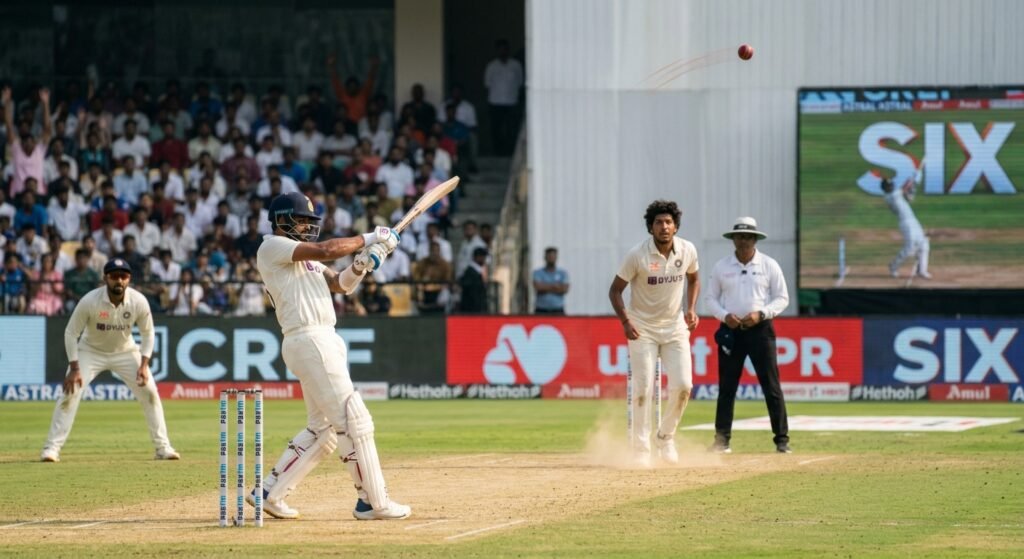
The performance should be viewed as another positive step rather than a definitive statement about his future.
The biggest test will be what comes next.
Can Vaibhav consistently score runs in first-class cricket?
Can he maintain his attacking style while improving his defence and shot selection?
Can he convert starts into hundreds?
Those questions will be more important than one 14-run over against Siraj.
For now, the evidence is encouraging.
His semi-final 92 and final 44 show that he can make an impact against senior red-ball opposition, while his attack on Siraj demonstrated the confidence that has made him such an intriguing young prospect.
Frequently Asked Questions
How many runs did Vaibhav Sooryavanshi score in the Duleep Trophy final?
Vaibhav Sooryavanshi scored 44 runs from 37 balls for East Zone.
How many runs did Vaibhav score against Mohammed Siraj?
He scored 14 runs from one over by Siraj, hitting a four, six and four.
What was Vaibhav Sooryavanshi’s score in the Duleep Trophy semi-final?
He scored 92 runs against Central Zone in the semi-final and also made 40 in the second innings, according to the match account used for this article.
Did Vaibhav Sooryavanshi score a century in the Duleep Trophy final?
No. He was dismissed for 44 off 37 balls.
Who scored 270 for East Zone?
Ishan Kishan scored 270 for East Zone in the final.
Who scored 101 for East Zone?
Kumar Kushagra scored 101.
Why is Vaibhav Sooryavanshi attracting attention?
His age, aggressive batting and performances in first-class cricket have attracted significant attention. His 4-6-4 attack against Mohammed Siraj was the standout moment of his final innings.
Is Vaibhav Sooryavanshi ready for Test cricket?
It is too early to make that judgment. At 15, his priority should be continued development and consistency in domestic cricket rather than an immediate move into Test cricket.
Final Takeaway
Vaibhav Sooryavanshi may not have scored a century in the Duleep Trophy final, but his 44 off 37 balls gave East Zone an explosive start and produced one of the match’s most memorable moments.
The highlight was his attack on Mohammed Siraj, when he struck the experienced India fast bowler for four, six and four in the same over.
The performance should not be treated as proof that Vaibhav is already ready for international cricket. At his age, long-term development matters far more than headlines.
What it does show is that Vaibhav is capable of playing aggressive cricket against experienced senior opposition.
His 92 in the semi-final, followed by 44 in the final, provides an encouraging early indication of his red-ball potential.
Now comes the difficult part: consistency.
If Vaibhav can combine his natural attacking ability with patience, defensive technique and better conversion of starts into big scores, his development will be worth watching closely.
For now, the 4-6-4 against Siraj has given cricket fans one memorable glimpse of India’s next generation taking on established experience.