
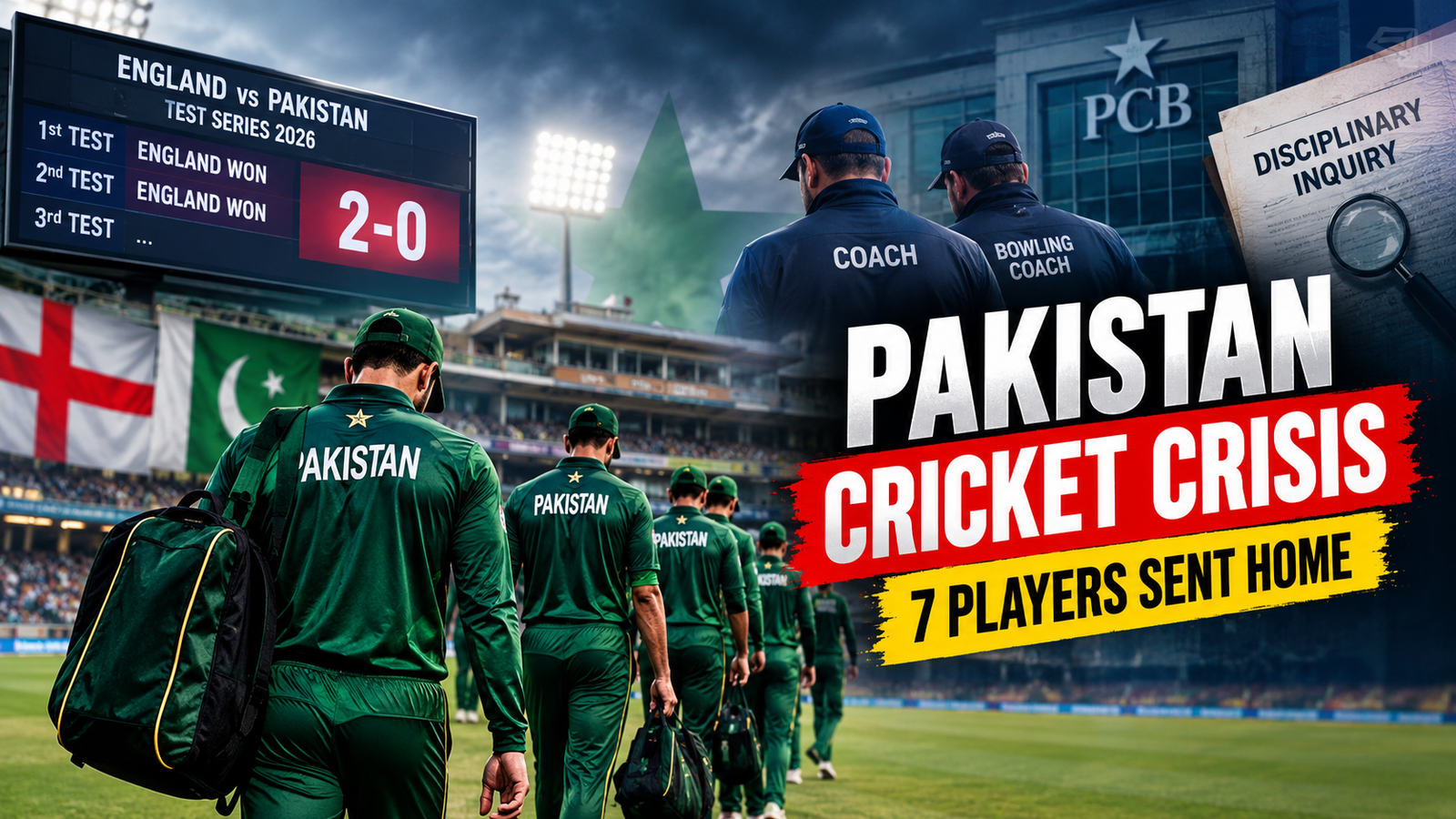
Pakistan cricket is facing another major crisis after the Pakistan Cricket Board (PCB) released seven players from the Test squad during the team’s disastrous 2026 tour of England. The dramatic changes came after Pakistan fell 2-0 behind in the three-match Test series, prompting the board to overhaul part of the playing group and coaching staff. The PCB has now also confirmed an internal inquiry into issues relating to discipline and conduct.
The seven players released from the Test squad are Mohammad Rizwan, Imam-ul-Haq, Salman Ali Agha, Ali Usman, Aamir Jamal, Muhammad Awais Zafar and Khurram Shahzad. The PCB also made changes to the coaching setup, with Sarfaraz Ahmed and Umar Gul removed from their respective roles during the tour.
The developments have triggered widespread debate about the state of Pakistan cricket, the team’s Test performances, player discipline, selection policy and the PCB’s decision-making process.
However, it is important to separate confirmed information from speculation. The PCB has announced an internal inquiry concerning discipline and conduct. Reports have also circulated about possible match-fixing concerns, but those allegations should not be treated as established facts unless the investigation produces evidence and the relevant authorities make formal findings.
What happened to Pakistan cricket in England?
Pakistan’s England tour was already under enormous pressure after two heavy Test defeats.
England won the first Test at Headingley by an innings and 103 runs. Pakistan then suffered another significant defeat at Lord’s, losing the second Test by 194 runs. The result gave England an unassailable 2-0 lead in the three-match series.
Instead of simply preparing for the final Test with the same squad, the PCB made sweeping changes.
Seven players were released from the Test group and sent home. Several replacements were brought into the squad, including players who had limited or no previous Test experience. The coaching structure was also changed, creating one of the most dramatic mid-tour shake-ups in recent Pakistan cricket history.
The timing was particularly significant because the changes came while the Test tour was still in progress.
That is why the story has become much bigger than an ordinary selection decision.
Which seven Pakistan players were sent home?
The seven players released from Pakistan’s Test squad were:
- Mohammad Rizwan
- Imam-ul-Haq
- Salman Ali Agha
- Ali Usman
- Aamir Jamal
- Muhammad Awais Zafar
- Khurram Shahzad
The PCB announced the changes following the completion of the second Test. According to reports, five of the seven players had participated in the second Test, while Aamir Jamal and Awais Zafar had not played a match during the England Test series.
The decision therefore affected both established international players and squad members who had not taken part in a Test during the tour.
Mohammad Rizwan
Mohammad Rizwan’s departure was one of the most notable elements of the shake-up.
Rizwan has been one of Pakistan’s leading wicketkeeper-batters across formats for several years, making his release from the Test squad a major talking point among Pakistan cricket supporters.
His removal also raised questions about the team’s leadership structure, wicketkeeping options and batting combination for the final Test.
Imam-ul-Haq
Imam-ul-Haq was another high-profile name among the players sent home.
His situation attracted additional attention because he had been dealing with an injury during the tour. The decision to remove him from the squad added another layer to the debate surrounding selection, fitness and communication within the Pakistan setup.
Salman Ali Agha
Salman Ali Agha was also released after serving as Pakistan’s captain in the first Test.
His inclusion among the players sent home underlined the scale of the changes. The PCB was not simply making minor adjustments to the lower end of the squad; senior and experienced players were also affected.
Ali Usman
Spinner Ali Usman was another member of the group released from the Test squad.
His departure was part of the wider restructuring that saw Pakistan bring in additional options before the final match.
Aamir Jamal
All-rounder Aamir Jamal was included in the seven-player group despite not appearing in a Test during the England tour.
Muhammad Awais Zafar
Batter Muhammad Awais Zafar was also sent home without appearing in a Test during the series.
Khurram Shahzad
Fast bowler Khurram Shahzad completed the group of seven players released from the squad.
The fact that the seven players had different roles and levels of involvement in the series makes the decision particularly unusual.
Why did Pakistan send seven players home?

This is one of the biggest questions surrounding the Pakistan cricket crisis in 2026.
The immediate background was Pakistan’s poor Test performance in England.
After two consecutive defeats, the team had already lost the series. The PCB responded with a major restructuring of the squad and coaching staff. However, the board did not publicly frame the entire decision simply as a reaction to individual batting or bowling performances.
The situation became even more serious when the PCB confirmed that it had launched an internal inquiry concerning discipline and conduct.
At present, the precise findings of that inquiry have not been publicly established.
That distinction matters.
There has been considerable online speculation about the reasons behind the players’ removal, including suggestions involving integrity and match-fixing. But speculation is not evidence.
Until the PCB or another competent authority publishes verified findings, readers should not conclude that any individual player has been involved in match-fixing.
The confirmed story is that the PCB is investigating issues related to discipline and conduct.
PCB launches internal disciplinary inquiry
The latest development has taken the Pakistan cricket crisis into a new phase.
The PCB has confirmed an internal disciplinary inquiry after reports raised concerns about discipline and conduct within the national team setup.
The board has not publicly disclosed all details of the matter, including exactly which individuals are the focus of the investigation or how long the inquiry will take.
This means several important questions remain unanswered.
What is the inquiry investigating?
The confirmed description is an inquiry into discipline and conduct.
The available reports do not establish a final finding of wrongdoing against the seven players.
Has match-fixing been proven?
No.
Reports and social-media discussions have raised match-fixing concerns, but an allegation is not the same as a finding.
This is particularly important in cricket because Pakistan has previously experienced major integrity controversies. Any new allegations therefore attract immediate attention, but they still require evidence and an official investigation.
When will the PCB announce the findings?
There is currently no confirmed public timetable for the conclusion of the inquiry.
The investigation could potentially clarify why the drastic squad changes were made and whether further action will follow.
Pakistan’s 2-0 Test series defeat made the crisis worse
The squad shake-up cannot be separated from Pakistan’s poor performance against England.
The first Test ended in a crushing defeat for Pakistan at Headingley, where England won by an innings and 103 runs.
The second Test at Lord’s brought another major setback.
England won by 194 runs and consequently took an unassailable 2-0 series lead.
The results exposed problems across several areas of Pakistan’s Test cricket.
The batting struggled to produce enough runs consistently.
The bowling attack failed to maintain pressure for long enough.
The team also faced questions about leadership, selection and preparation.
When a team loses a series, changes are common. But making such extensive changes before the final Test demonstrates just how serious the situation had become.
Why is this Pakistan cricket crisis bigger than one Test series?
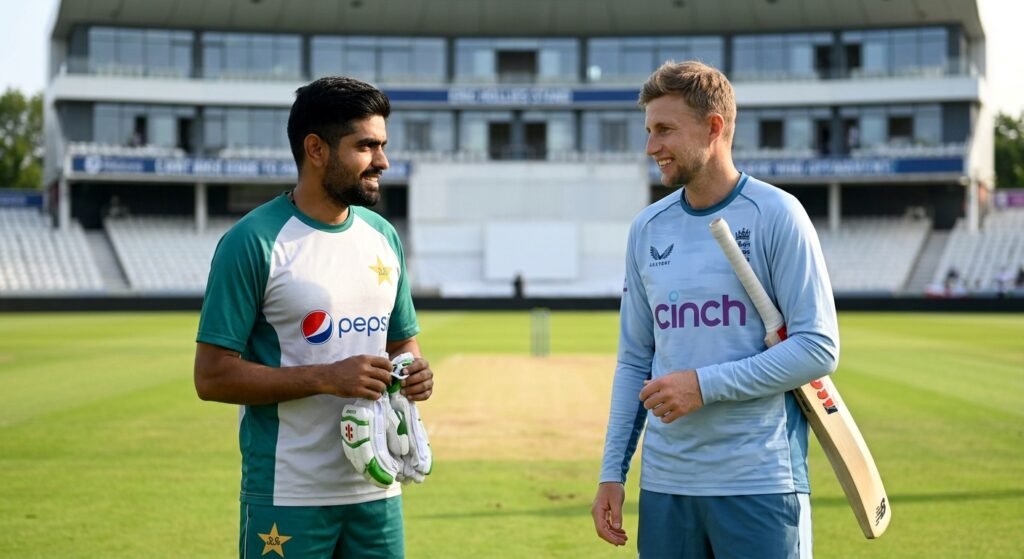
The England tour has become a symbol of wider concerns about Pakistan cricket.
Former Pakistan captain Azhar Ali has argued that the problems are structural rather than something that can be solved in a few months. He has pointed to inconsistent management, changes in leadership and a lack of long-term planning.
That argument is important because Pakistan’s problems have repeatedly appeared across different coaching groups, captains and selection committees.
Changing players may provide a short-term response.
Changing coaches may provide a new voice.
But long-term improvement requires a stronger domestic structure, better player development, consistent selection criteria and an environment in which young cricketers can develop without constant upheaval.
Coaching staff also changed
The player changes were accompanied by changes to the coaching staff.
Head coach Sarfaraz Ahmed and bowling coach Umar Gul were released from their roles during the tour. Mike Hesson and Ashley Noffke were brought into the setup for the remainder of the England tour.
This created an unusual situation.
Pakistan was preparing for a Test match while simultaneously changing players, coaches and parts of its support structure.
For a Test team, where preparation, consistency and tactical planning are particularly important, such disruption can create additional pressure.
Why the timing of the changes matters
The timing is arguably as important as the names involved.
The squad changes occurred after Pakistan had already lost the Test series.
That means the final Test is effectively being played after England secured the series.
Pakistan therefore has two competing objectives.
The first is to restore some pride and confidence.
The second is to determine whether the new players can form part of the team’s future.
This makes the final Test more significant than a simple dead rubber.
It could become an audition for the next generation of Pakistan Test cricketers.
Seven replacements bring fresh faces into the squad
The PCB named seven replacements after releasing the seven players.
The replacement group included five players without previous Test experience and two players who were already Test-capped, according to the board’s announcement as reported by Dawn.
That creates an interesting opportunity.
Pakistan has often produced talented young cricketers, particularly fast bowlers and attacking batters.
If the new players perform well, the England crisis could unexpectedly accelerate a generational transition.
A crisis can sometimes become the beginning of a rebuilding process.
The challenge is making sure the changes are part of a coherent plan rather than another short-term reaction.
What does this mean for Pakistan Test cricket?
Pakistan’s Test cricket has reached an important crossroads.
The team needs stability.
Test cricket requires players to understand their roles and spend significant time developing the skills needed for long-form cricket.
Young batters need opportunities to learn how to construct long innings.
Fast bowlers need workload management and technical development.
Spinners need experience in different conditions.
Wicketkeepers need consistency behind the stumps and with the bat.
Most importantly, the team needs a clear selection philosophy.
If players are selected for one series and discarded after a few poor performances, development becomes difficult.
On the other hand, poor performance cannot simply be ignored.
The PCB therefore faces a difficult balancing act between accountability and patience.
The Mohammad Rizwan question
One of the biggest talking points is what happens next with Mohammad Rizwan.
Rizwan remains one of Pakistan’s most recognizable international cricketers, so his removal from the Test squad naturally generated significant attention.
The important question is whether the decision represents:
- a temporary response to the England crisis,
- a tactical Test selection decision,
- a broader change in Pakistan’s leadership structure,
- or part of the PCB’s disciplinary process.
The answer will become clearer once the board provides further information.
Until then, claims about Rizwan’s future should be treated cautiously.
What happens to Imam-ul-Haq?
Imam’s future is another major question.
He has been an established part of Pakistan’s batting setup, but his position has increasingly been discussed in the context of form, fitness and selection.
The England crisis could give Pakistan selectors an opportunity to test alternative opening combinations.
However, replacing an experienced opener is not enough by itself.
The new players must be given sufficient opportunities to establish themselves.
Is this the start of a Pakistan cricket rebuild?
It could be.
The current crisis has created an opportunity to rethink the Test team.
Pakistan could use the remaining England Test and subsequent red-ball fixtures to identify a core group of players who can form the foundation of the next Test cycle.
A successful rebuild would require:
1. Consistent selection
Players need to understand what they must do to earn and retain a place.
2. Strong domestic cricket
The domestic system must provide competitive first-class cricket and a pathway into international cricket.
3. Better red-ball preparation
Pakistan’s Test players need more experience playing long innings and bowling long spells.
4. Stable coaching
Constant coaching changes make it difficult to establish a long-term tactical identity.
5. Clear leadership
The captain and coaching staff must receive enough authority and time to implement a plan.
6. Player accountability
Players must also accept responsibility for performance, discipline and professionalism.
Pakistan cricket crisis and the role of the PCB
The PCB is now facing pressure from several directions.
Supporters want immediate results.
Players want clarity.
Coaches need stability.
Selectors need authority.
Young cricketers need opportunities.
And the board needs to demonstrate that decisions are based on a coherent cricketing strategy.
The biggest danger is that the current crisis becomes another cycle of dramatic changes followed by another disappointing series.
If that happens, Pakistan cricket could remain trapped in a pattern of:
poor results → major changes → short-term optimism → inconsistent performances → another crisis.
Breaking that cycle will require more than replacing seven players.
What should Pakistan do next?
Pakistan’s immediate priority should be to stabilize the Test setup.
The board should complete its internal inquiry fairly and transparently while avoiding premature conclusions.
The selectors should assess the replacement players based on performance rather than reputation.
The coaching staff should establish clear roles.
And the team should develop a longer-term Test strategy.
The final Test against England provides a valuable opportunity.
Even though the series is already lost, Pakistan can use the match to assess new combinations and identify players who can handle international pressure.
Can Pakistan recover from the England tour?
Absolutely.
Pakistan cricket has a long history of producing world-class talent.
The country’s fast-bowling tradition remains one of its greatest strengths, while its domestic system continues to produce technically gifted players.
The current problem is not necessarily a lack of talent.
It is the ability to convert talent into consistent international performance.
That requires structure.
A four- or five-year development strategy would arguably be more valuable than another series of short-term reactions. Azhar Ali has similarly argued that meaningful structural change cannot be achieved instantly.
What Pakistan fans should watch next
There are several developments Pakistan cricket supporters should monitor closely.
PCB inquiry findings
The most important development will be the outcome of the internal disciplinary inquiry.
New players’ performances
The seven replacements could become the most important story of the final Test.
Mohammad Rizwan’s future
His next international assignment will attract major attention.
Imam-ul-Haq’s comeback
His fitness and future selection will remain closely watched.
Pakistan’s next Test squad
The next squad announcement will reveal whether the England changes were temporary or part of a broader rebuild.
Coaching structure
The PCB’s decision regarding its long-term coaching setup could shape Pakistan’s next Test cycle.
Pakistan cricket crisis: what happens next?
The current situation is difficult, but it can also become a turning point.
Pakistan has already lost the England Test series 2-0.
Seven players have been released from the Test squad.
The coaching staff has been reshuffled.
The PCB has launched an internal inquiry into discipline and conduct.
And a new group of players has been brought into the setup.
The key question now is whether these decisions represent a genuine rebuilding strategy or simply another emergency response to poor results.
That answer will not come from one Test match.
It will come from what Pakistan does over the next several months.
If the PCB combines accountability with long-term planning, invests in domestic red-ball cricket and gives young players a stable pathway into the national side, the England crisis could ultimately become the beginning of a stronger Pakistan Test team.
If the changes remain reactive, however, the same problems could return.
Frequently Asked Questions
Why were seven Pakistan players sent home from England?
The PCB released seven players from the Test squad after Pakistan’s heavy defeats against England. The board has subsequently confirmed an internal inquiry relating to discipline and conduct.
Which seven Pakistan players were sent home?
The players were Mohammad Rizwan, Imam-ul-Haq, Salman Ali Agha, Ali Usman, Aamir Jamal, Muhammad Awais Zafar and Khurram Shahzad.
Did Pakistan lose the England Test series?
Yes. England took an unassailable 2-0 lead after winning the first two Tests. England won the first Test by an innings and 103 runs and the second by 194 runs.
Why did the PCB launch an inquiry?
The PCB has confirmed an internal inquiry into issues involving discipline and conduct. The board has not publicly disclosed all details of the investigation.
Were the seven players accused of match-fixing?
There have been reports and speculation about match-fixing concerns, but there is no established finding in the information currently available that the seven players were guilty of match-fixing. The confirmed PCB position concerns an internal inquiry into discipline and conduct.
Was Mohammad Rizwan removed from the Pakistan Test squad?
Yes. Mohammad Rizwan was among the seven players released from the Test squad during the England tour.
Was Imam-ul-Haq sent home?
Yes. Imam-ul-Haq was one of the seven players released from the Test squad. Reports also noted his injury situation during the tour.
Who replaced the seven players?
The PCB brought seven replacements into the squad, including five players without previous Test experience and two Test-capped players.
What does the Pakistan cricket crisis mean for the future?
The crisis could lead to a significant rebuild of Pakistan’s Test team. The success of that rebuild will depend on selection stability, domestic cricket, coaching continuity, player development and stronger long-term planning.
Final verdict
The phrase “Pakistan cricket crisis” is no longer limited to poor results on the field.
The England tour has exposed questions about performance, selection, leadership, coaching, discipline and the overall direction of Pakistan Test cricket.
The decision to send seven players home during an ongoing tour was extraordinary.
The subsequent PCB inquiry makes the situation even more significant.
But the most important part of this story has yet to be written.
Pakistan now has a chance to turn a damaging England tour into the starting point of a new Test era.
The immediate results matter, but the bigger question is whether the PCB can build a stable system capable of producing consistent international performances.
For Pakistan cricket, the next few months could be more important than the final scorecard in England.