
President Donald Trump spikes global tariffs to 15% after the Supreme Court blocks before import taxes. Here’s is the complete detail how Section 122 works, what it means for US prices, businesses, trade partners such as EU and UK.
After a week the US Supreme Court struck down his sweeping worldwide import taxes, Donald Trump has escalated the trade battle — announcing a new 15% global tariff on most goods entering the United States.
Firstly set at 10%, the new levy was spiked to the legal ceiling allowed under Section 122 of the Trade Act of 1974, a little-used provision that allows temporary tariffs without before congressional approval.
The move comes after a 6–3 Supreme Court ruling decided Trump exceeded his authority under the 1977 International Emergency Economic Powers Act (IEEPA). That decision invalidated a mega part of his tariff strategy — but it didn’t end it.
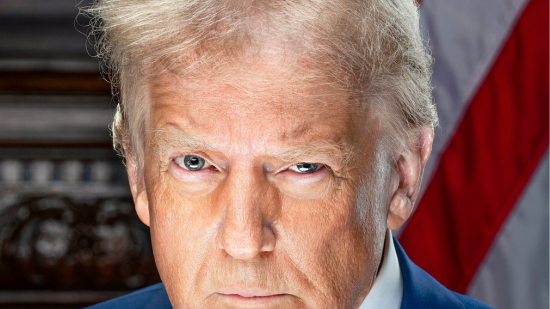
Donald Trump 2025 speaking Project 2025 policy blueprint influences immigration and Venezuela strategy
What Altered After the Supreme Court Ruling?
The Supreme Court ruled that using IEEPA to impose broad, worldwide tariffs stretched executive emergency powers beyond congressional intent.
Here’s what that means:
The earlier tariffs imposed under IEEPA were struck down.
The administration can no longer rely on emergency economic authority for blanket import taxes.
Billions in past collected tariffs may face legal challenges.
However, Trump’s administration rapidly moved to Section 122 — a separate statutory tool designed to address balance-of-payments deficits.
How Section 122 Tariffs Work
Section 122 of the Trade Act of 1974 permits
Up to 15% tariff rates
Temporary duration (approximately 150 days)
No prior congressional vote required
Renewal or extension only with congressional approval
This mechanism was originally designed as a short-term stabilization tool — not as a long-term trade restructuring strategy.
Donald Trump 2025 speaking Project 2025 policy blueprint influences immigration and Venezuela strategy
Important Technical Implications
The 15% rate is the statutory maximum.
After five months, Congress must involve to continue the policy.
Legal scrutiny may shift to whether the US trade deficit qualifies under Section 122’s intended scope.
Why Trump Adds the Tariffs Are Necessary
Trump has consistently argued tariffs:
Decrease the US trade deficit
Incentivize domestic manufacturing
Power up middle-class jobs
Decrease e reliance on China and other import-heavy economies
Yet recent government data shows the US trade deficit widened to roughly $1.2 trillion, up 2.1% year-over-year — even during prior tariff enforcement.
This raises a macroeconomic debate:
What Products will be more Affected?
The new 15% global tariff applies broadly — but not universally.
Likely Covered:
Consumer electronics
Machinery
Apparel
Household items
Industrial inputs
Exemptions:
Critical minerals
Certain metals
Pharmaceuticals
Meanwhile, existing tariffs on:
Steel
Aluminium
Lumber
Automobiles
remain in place under separate trade statutes.
Effects on Consumers: Will Prices Rise?
Short answer: possibly — and selectively.
Tariffs function as import taxes paid by US importers. While not automatically passed to consumers, historical data shows that:
60–90% of tariff costs often get embedded in retail pricing.
Businesses may absorb costs temporarily but typically adjust margins.
Inflationary effects vary by sector.
Industries Most Affected
Consumer electronics retail
Home improvement materials
Automotive components
Small and mid-sized import-dependent retailers
If fully passed through, a 15% tariff on affected goods could increase retail prices by 3–8% depending on supply chain structure.
What About Refunds?
The Supreme Court did not directly order refunds for pastly collected tariffs under IEEPA.
However:
Businesses may file claims.
Trade groups representing over 200,000 importers are preparing legal challenges.
Refund litigation could take years.
If refunds are mandated, the federal government may need to return tens of billions — affecting fiscal projections.
Worldwide Reaction: UK, EU and Beyond
Countries that previously negotiated 10% tariff deals — including the UK — now face uncertainty.
While sector-specific agreements (steel, aerospace, autos, pharmaceuticals) appear intact, broader imports may fall under the 15% global rate.
European lawmakers have already signaled caution about ratifying trade agreements amid this escalation.
The risk: retaliatory tariffs and renewed trade tensions.
Political Stakes: 2026 Midterms in View
This tariff escalation is not just economic — it’s political.
For supporters, it reinforces:
Economic nationalism
Domestic industry protection
Tough-on-trade positioning
For critics, it signals:
Market instability
Consumer cost increases
Executive overreach
With midterm elections approaching, tariffs could become a central campaign issue.
Additional Details: What Most Coverage Is Missing
Here’s what many reports aren’t emphasizing:
1. Section 122 Has Rarely Been Used at Scale
It was designed for balance-of-payments crises — not systemic trade policy shifts.
2. Corporate Hedging Activity Is Rising
Multinational companies may accelerate:
Supply chain diversification
Nearshoring to Mexico
Strategic inventory stockpiling
3. Legal Risk Is Not Over
If courts determine the trade deficit does not meet Section 122’s criteria, another constitutional showdown could emerge.
4. Inflation Timing Matters
If tariffs take effect alongside seasonal import cycles (e.g., holiday goods), price impact could amplify
What Happens Next?
Clarification on implementation date.
Possible injunctions challenging Section 122 usage.
Congressional debate within five months.
Potential retaliatory measures from major trade partners.
Markets are now pricing in short-term trade volatility rather than permanent restructuring.
Conclusion
President Trump’s decision to raise global tariffs to 15% marks a dramatic continuation of his protectionist trade agenda — even after the Supreme Court’s rebuke.
By pivoting to Section 122, the administration has bought time. But it has also introduced new legal, economic, and geopolitical uncertainty.
Why did Trump increase tariffs to 15%?
After the Supreme Court struck down earlier tariffs under IEEPA, the administration turned to Section 122 of the Trade Act of 1974, which allows temporary tariffs up to 15%.
When will the 15% tariff take effect?
The administration indicated late February, though official confirmation on timing remains pending.
Will prices increase for consumers?
Possibly. Import-heavy sectors may pass on part of the 15% cost increase to consumers.
Can businesses get refunds for previous tariffs?
Refunds are not automatic. Legal action may determine whether previously collected tariffs are reimbursed.
How long can the 15% tariff remain in place?
Approximately five months unless Congress approves an extension.