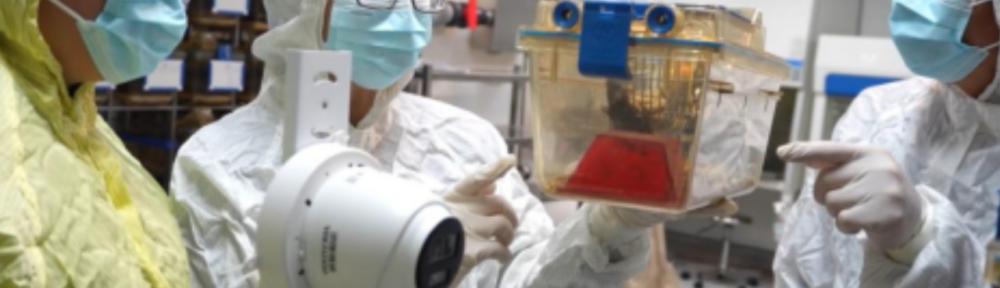
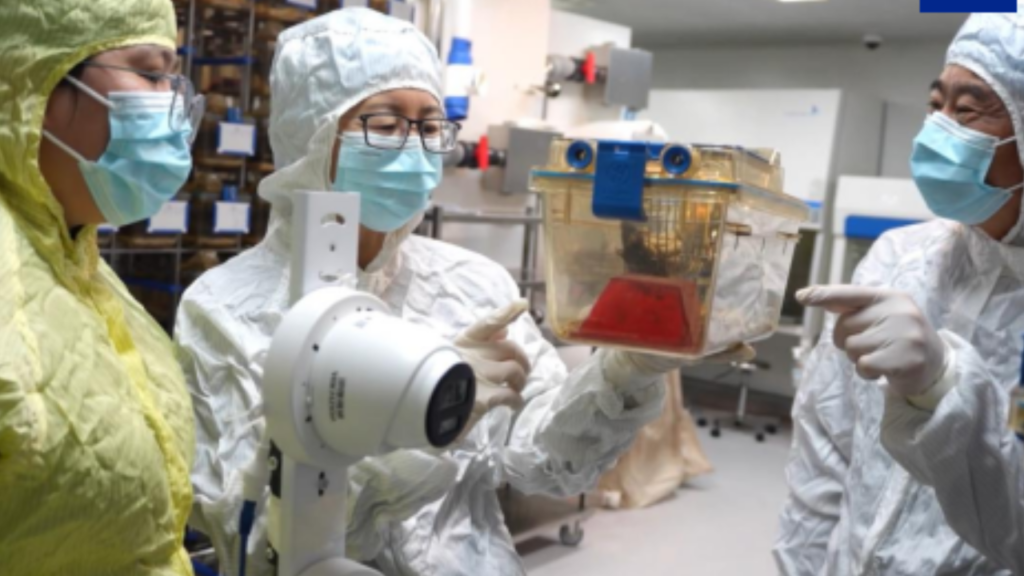
A research team from Chinese Academy of Sciences CAS opened up the names of four mice which were part of latest mission aboard China space station, during public science event on Saturday.
The mice have named Wangtian, Lanyue, Zhuiyn and Zhumeng which translate to gaze at the sky reach for the moon chase the clouds and follow the dream.
The announcement was accompanied by release of cartoon illustrations of mice, co created with Xinhua News Agency.
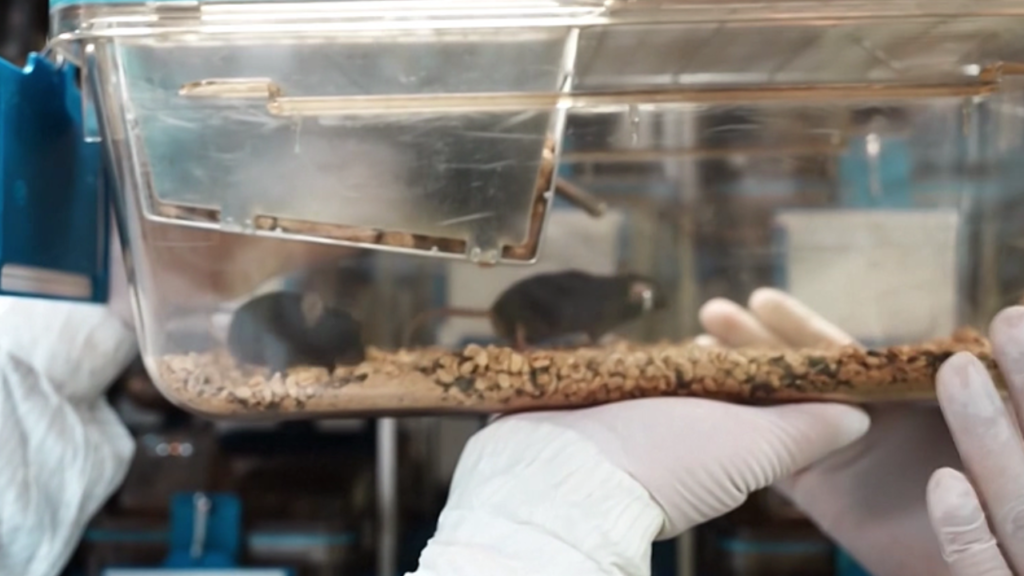
On October 31 the four mice number 6, 98, 154 and 186 were select from 48 candidates and flown aboard the Shenzhou 21 crewed spacecraft to their temporary habitat in space.
China Space News
During mission Xinhua invited the public to propose names for mice with final choice based on famous submission online.
The mice safely return to Earth with Shenzhou 2o crew on November 14.
“We have initiated series of studies on mice following their return. said Li Tianda.
He also said these studies aimed to uncover how space enviroment affected mammalian physiology and behavior in terms of response and adaptation.
The public science event themed flying mice will run for one month at National Zoological Museum of China offering the public firsthand look at cutting edge biological experiment conducted as part of China major space programs.
The event is organized by the Technology and Engineering Center for Space Utilization and the IOZ under the CAS.
One of four mice that traveled aboard China Shehnzhou 21 spacecraft has given birth to healthy pups after coming back to Earth, The Technology and Engineering Center for Space Utilization at Chinese Academy of Sciences CAS said on Friday.
Space on October 31 for survival and adaptation experiment under space enviroment.
They lived in specialized small mammal habitat onboard China space station
After their return to Earth on November 14 one female
After their return to Earth on November 14, one female mouse conceived and later delivered nine pups on December 10, six of which are alive and thriving – a normal survival rate.
The space journey of the mice was not all smooth.
Space News
Due to adjustment to Shenzhou 20 return plan the mice faced a food shortage challenge for extended time period.
In reply the unexpected situation the ground research team rapidly activated the emergency reply mechanism conduction multi plan demonstration and ground verification.
The external water, supply interface on space station feeding system, the research team, in collaboration with in orbit astronauts was able to pump water into mouse habitat.
The researchers will conduct systematic research on the pups focusing on their growth and development curves as well as change in physiological and pathological characters.
They will monitor the reproductive capabilities of these offspring and attempt to observe a second generation of space mice further exploring potential impacts of space environment on multigenerational heredity and development in mammals.
For the mice food the researcher identified several potential changes from astronaut food list consisting of compressed biscuits corn hazelnuts and soy milk. and conducted verification test on ground to ensure that mice would accept the new food and it would not harm their health.
After careful evaluations soy milk was selected best emergency food.
Relying on AI behavior analysis system developed in advance the research team was able to track mice movement eating sleeping status in real time predicting the progress of feed consumption to provide key data help for emergency decision making.